After a medical examination to diagnose health conditions that can be underlying causes for hair loss, a derma roller hair regrowth can be used. This is a simple and efficient solution to interrupt early alopecia and recover from losses. It activates scalp blood vessels, increases collagen in the dermis, and contributes to simultaneous prescribed treatments. Until overall, evidence-based guidelines manage a medical condition, you can also benefit from the Scalp Micropigmentation procedure at Anna Kara’s PMU salon.
What Is Derma Roller Hair Regrowth?
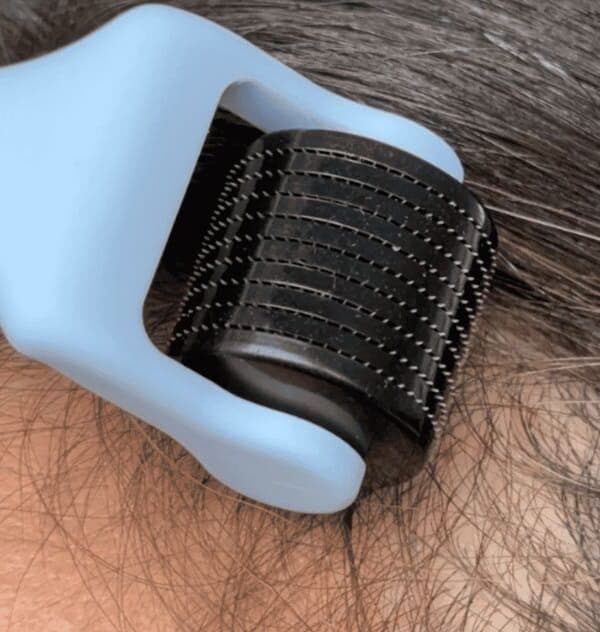
A dermaroller for hair regrowth can be used as an affordable at-home tool. For higher efficacy and safety, it is better to have the treatment completed with the help of professionals. The device makes the tiniest, skin-deep holes on the scalp. These small injuries induce wound healing, which stimulates hair growth. To balance potential risks of injury and benefit from rolling, it is vital to take a dermaroller with needles of a matching size and follow the aftercare requirements.
How Is Derma Roller Hair Regrowth Done?
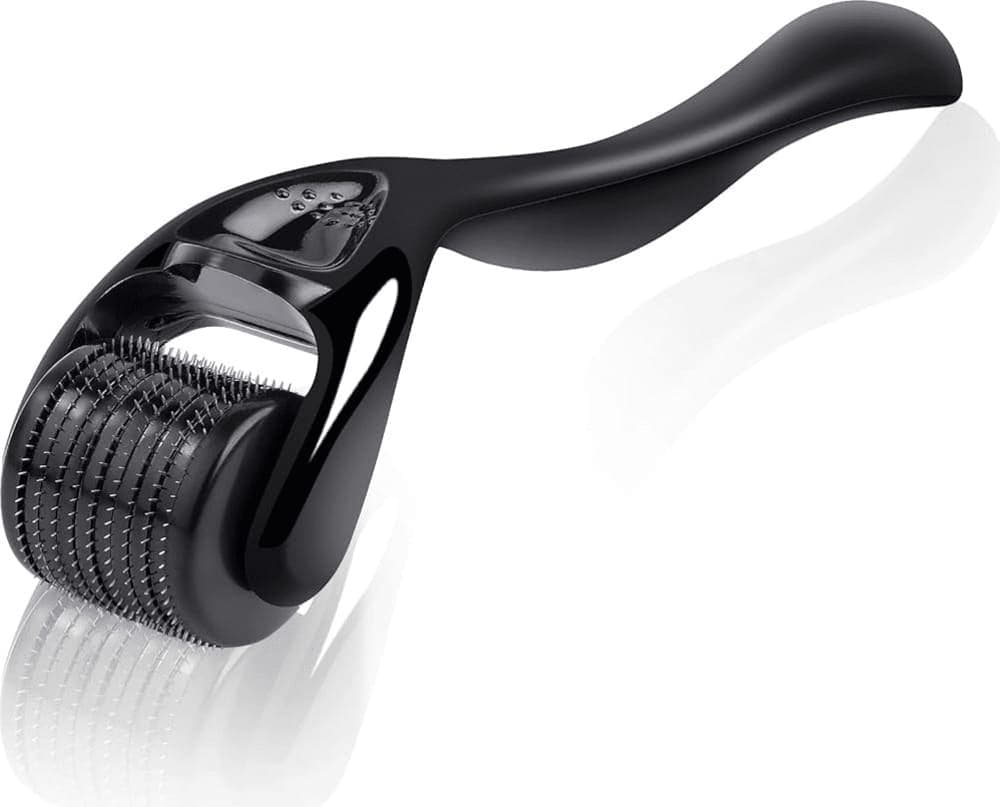
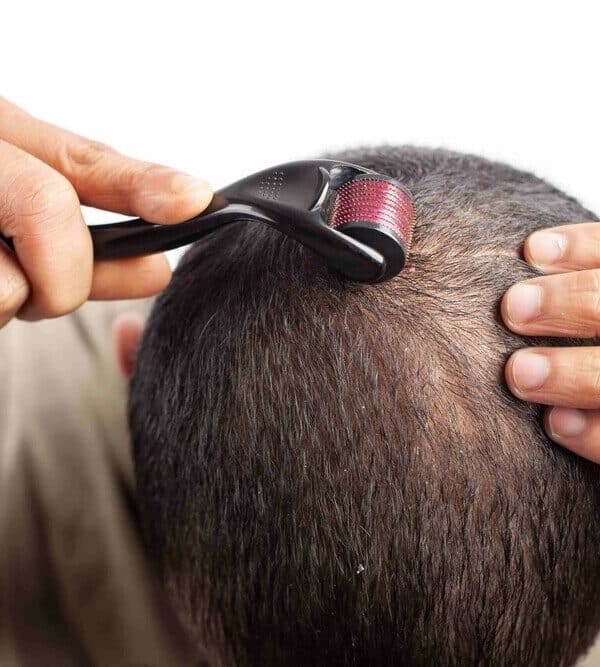
This handheld device consists of simple components: a drum and a handle. The drum (cylindrical roller) contains hundreds of fine microneedles. Typically, needles are made from medical-grade stainless steel or inherently rust-resistant titanium. The latter can be preferred due to its durability. Through those micro-holes in the skin, the special hair growth serums are absorbed. Simultaneously, the mechanical stimulation boosts blood flow that nourishes the hair follicles and makes the hair grow.
Does It Hurt?
When a roller is applied to the scalp, a patient should experience slight discomfort from pricks. Intolerable pain is unacceptable. It can appear when pressing is too hard or a roller with too long needles is used. Anyway, it is vital not to cause scalp irritation and to use only a clean roller on clean skin.
Can I Perform Derma Roller Hair Regrowth Myself?
A derma roller for hair regrowth can be used without professional help if you are sure of the procedure requirements. To succeed, you should:
- Wash the scalp thoroughly and clean a dermaroller.
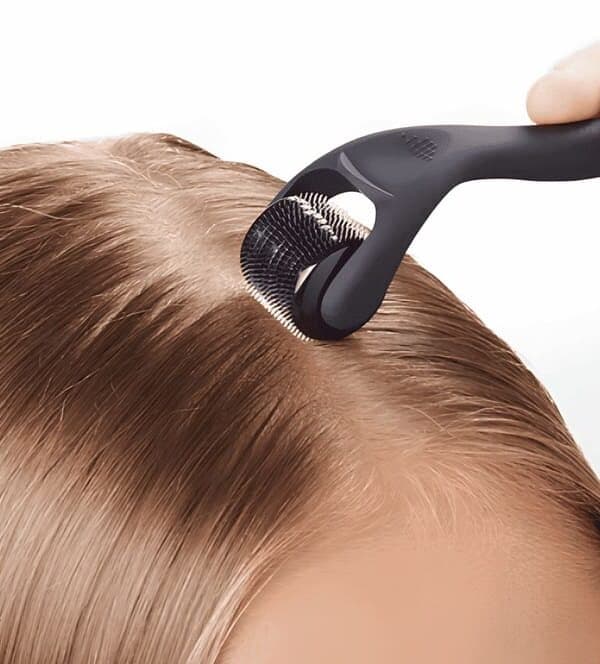
- Roll the tool over the scalp with gentle pressing in whatever directions.
- Interrupt rolling and work a hair growth serum into the skin.
- Clean, disinfect, and store the roller.
When at home, the treatment should not be repeated more frequently than twice a week.
How Do I Prepare for a Derma Roller Hair Regrowth Session?
Nothing extraordinary is needed to prepare for a professional derma roller hair regrowth session. You should ensure that you know your skin sensitivity to inform a specialist so that he takes a device with matching needles. Prior to the treatment, you should wash your hair with an everyday hair shampoo. The hair and scalp should be entirely dry to avoid irritation. If you decide to treat your hair on your own, you should sanitize a dermaroller and your hands, too, before starting to roll the device over your scalp.
What’s a Dermarolling Hair Treatment Like?
Dermarolling is a non-invasive method that works gently. A specialist treats the head with a device, keeping the pressure under control. That is why micro-injuries on the skin are almost invisible but allow for the administration of transdermal serums for the best results. The dermarolling hair treatment has a high efficacy but a lower cost and a shorter recovery period compared with other solutions like mesotherapy or hair transplants, which are invasive.
This method strengthens natural hair roots to prevent hair shedding and activates inactive follicles. If used for men, it can enhance hair growth for their beards by making them thicker. While women can make their eyebrows thicker with tinting at Anna Kara’s PMU studio.
Which Is Better, Professional or At-Home Derma Rolling for Hair?
Professional derma rolling is better due to proper performance with almost no risks. The experienced specialist ensures sterility to prevent inflammation, knows exactly how to impact the scalp, knows what length of a needle should be chosen, defines the time needed for rolling, and applies the proper topical treatment. And especially, using a device with longer needles is best left to professionals.
Is Derma Roller Hair Regrowth Possible for Any Hair Condition?
Almost anyone can use a derma roller, but the healing response will vary. That happens because of a range of factors, including reasons for hair loss, the patient’s overall health state, and the quality of the procedure performed. If an individual suffers from eczema, psoriasis, or severe dandruff, the device cannot be applied.
Is Everyone a Candidate for Derma Roller Hair Regrowth?
Dermarolling is a safe treatment suiting both male and female pattern hair loss, but there are some contraindications, including:
- recent transplants;
- blood clotting and bleeding disorders;
- administration of anticoagulants;
- abnormal response to skin trauma, like hypertrophic or keloid scarring;
- scalp infections in an active form.
Pregnant and breastfeeding women shall consult with their healthcare provider regarding this treatment. Also, an individual might not be comfortable with the needles and just refuse to tolerate rolling. If dermarolling is not recommended for any of the above reasons, the other option can be found.
How Often Should I Repeat Derma Roller Hair Regrowth Sessions?
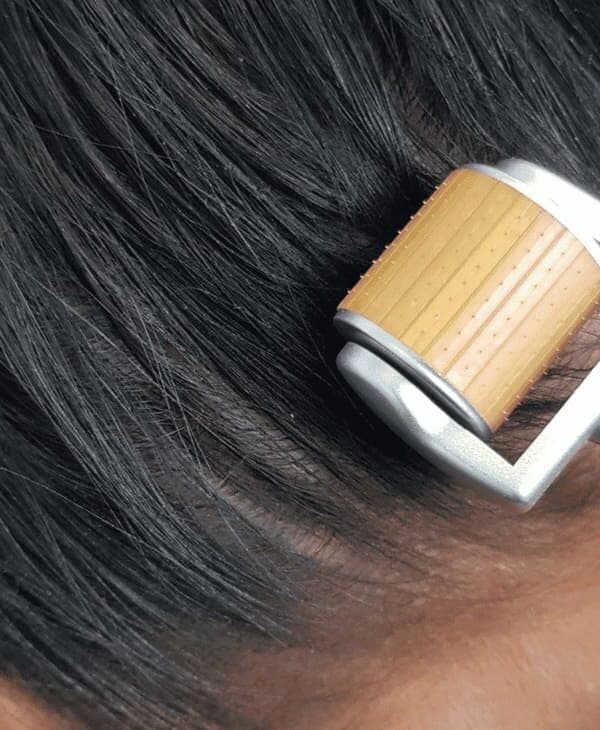
The frequency of sessions is defined by a specialist. Overdoing isn’t good for the result. There must be enough time between sessions needed for the tiniest wounds created by a roller to heal, which depends on the needle size, ranging from 2 mm to 0.1 mm in length.
When a roller is used at home, needles 0.1 mm long are allowed, as they are safe even for sensitive skin. When needles 0.2–0.25 mm long are used, the scalp is usually treated twice a week. Starting at 0.5 mm, the treatment is usually done once a week. The needles longer than 1.0 mm can be used once every two weeks or even once a month.
How Fast Can I Expect the Results?
Typically, results from the treatment are seen within up to half a year. In most cases, things get better in a couple of months already. Still, the response is very individual. The post-microneedling phase lasts for nearly 40 days.
Is Derma Rolling Hair Regrowth Safe?
If done by a professional or at home, but with the shortest needles, along with the requirements, the treatment is considered to be safe. Still, there are potential risks arising from injuries and improper aftercare. To avoid them:
- pressure should not be excessive;
- the device (needles) should be sterilized;
- the scalp should be clean and healthy.
After a session, a patient should use sunscreen when leaving the house and refrain from sun exposure at the post-treatment stage.
Are There Any Side Effects?
When a derma roller is used, side effects are as follows:
- skin irritation resulted in temporary redness of the treated skin;
- skin sensitivity (it shall be diagnosed before the session, as it is a contraindication);
- infection because of an unsterilized derma roller.
Excessively long needles and excessive pressure can raise the risks, as well as repeated misuse.
Is There Any Aftercare?
To support a healing process and improve benefits, every time rolling is over, you should:
- avoid direct sunlight for 24–48 hours;
- harsh shampoos and hair styling products for 24-48 hours;
- do not irritate the scalp in any way, including heavy-intense workouts in the gym or swimming in the pool;
- keep the scalp clean and hydrated by using gentle products prescribed by a professional;
- examine the scalp to ensure that there is no severe irritation, and if any, contact a specialist.
It’s normal for the scalp to become slightly red or swollen after a session, but after a while, it should disappear gradually. Mild peeling is possible in a few days after the session, which requires moisturizing.
How Much Does Professional Derma Roller Hair Regrowth Cost?
The price for professional dermarolling depends on patients’ individual conditions and the service provider’s price policy. The range is between $200 and $700 per session. It would be wise to find out what is included in the price, as this treatment can be a part of a complicated hair regrowth protocol.
What If It Doesn’t Work?
If the treatment fails to meet expectations, topical products with vitamins can be added by a professional. Also, there are alternative treatments like laser hair therapy and others. For instance, in the KiwiSPA, there are all-natural hair loss solutions, providing visible results. They include treatments in the SPA and at-home regiment. The studio uses medical-grade innovations and cultivates beauty inside and out. They offer free consultations to help a client to define the best solution.
Derma Roller Hair Regrowth: Main Takeaways
To get the result from a dermaroller and make your hair regrow, you should:
- prefer a professional performance;
- combine it with topical serums;
- inform a specialist about health states and medications you take;
- adhere strictly to aftercare recommendations.
If using at home, ensure that the roller is clean and its needles are not rusty or bent.
Conclusion
Dermarolling is one of the best non-invasive hair loss treatments with a low cost and minimal recovery. It stimulates hair regrowth and should be used correctly to avoid side effects. Consulting a qualified medical advisor about potential contraindications is recommended. As the device cannot be applied to eyebrows, women can make them fuller and more accurately defined by microblading at Anna Kara’s PMU.