
Microblading at Anna Kara’s PMU salon not only creates a perfect, natural look, but it also lasts for a long time without side effects, provided that all the post-treatment recommendations are followed. In the article, we’ll explore how the microblading effect changes in 5 years after the procedure and offer easy solutions to smooth some conditions.
Overview of Microblading and Its Longevity
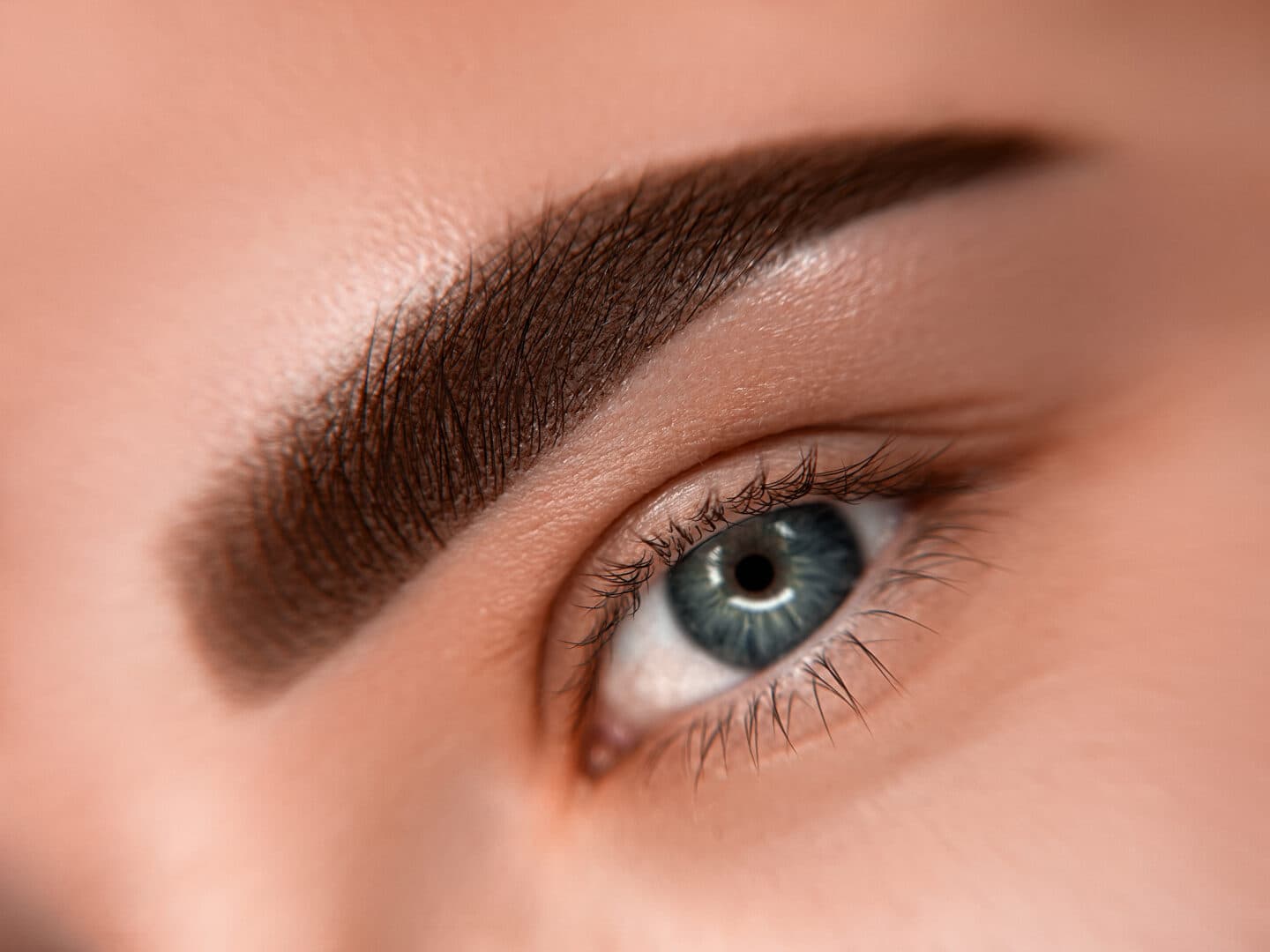
Microblading mimics natural brows, making them bolder and beautifully shaped, saving time for daily makeup. It is considered a form of superficial micropigmentation, but pigment is integrated into cuts not going deeper than the papillary dermis, which can be compared with some other tattoo techniques.
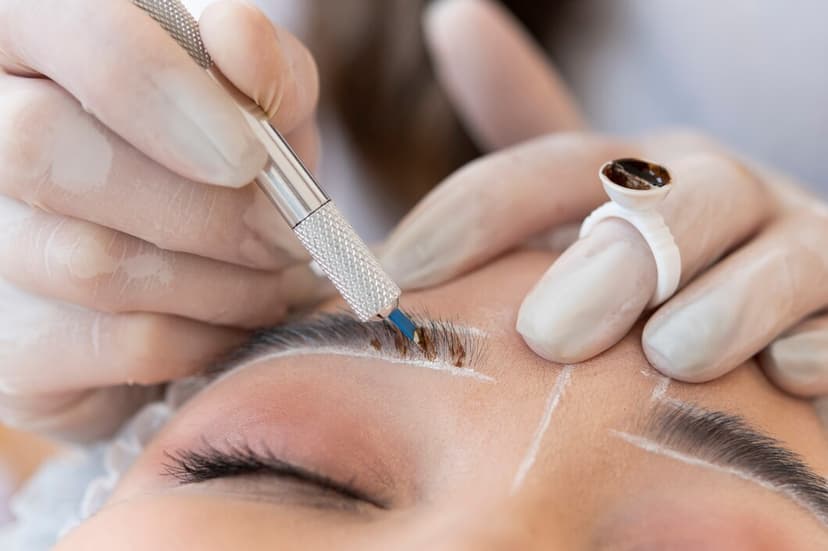
This semi-permanent method is based on creating hair strokes with fine blades of various configurations. An artist makes cuts on the brow area, using a handheld instrument, and places pigment of an agreed color in there. The result doesn’t last as long as permanent makeup, which can be taken as a benefit and a drawback, depending on the client’s preferences.
Typically, the technique is recommended for young, medium-age skin of normal type. Sensitive and oily skin, for various reasons, will not tolerate the procedure. Mature skin and enlarged pores are also relative contraindications and require additional consultation with an artist. Delicate and thin skin can respond with increased bleeding that will result in loss of pigment and a substandard effect. The color will not show up as brightly as expected. Also, strokes can look blurry.
Common Changes in Microblading After 5 Years
Commonly, microblading lasts for up to 18 months and requires touch-ups every 8 weeks during this period. When the time runs out, color boosts are needed. The perfection sessions are mandatory to support the effect and correct any minor imperfections. There is no need for touch-ups earlier than 6 weeks to avoid the risk of skin damage.
Without annual maintenance, pigment gradually fades, which ruins individual hair strokes and changes color depending on skin type and lifestyle. Being a semi-permanent tattoo, it usually fades partially, leaving a faint background shadow instead of some strokes, while others remain brighter. The sharpness of hair strokes disappears.
In 5 years, fading is almost total. Less than 30% of the initial pigment can remain in the skin, but more often it disappears totally. Again, lifestyle and skin type impact the result. In most cases, brows return to their natural state. Sometimes, blurred leftover pigment creates a powdered eyebrow effect instead of distinct lines made by a blade. Depending on the pigment quality, the color can be noticed, but the hue can change to ashy or reddish tones.
How Skin Type Affects Microblading Results Over Time
Skin type affects microblading badly. As we have mentioned earlier, this technique suits normal young or mid-aged skin. But we can broaden the scope by varying the options and recommending the method for transitional states. If this is the case, you should know that dry skin and dry-prone skin hold pigment longer and require a longer pause between sessions. If there is more sebum in the skin, the effect will change towards blurring and fade faster. Sensitive skin can respond to cuts. It can suffer from irritations and allergies.
Actually, in 5 years, the results of microblading can be different in detail and depend on the client’s peculiarities based on genetics, among other factors. They all can be grouped into three general, natural, and expected changes:
- fading of pigment;
- color shifts;
- gradual blurring.
The result depends on skin type, sun exposure, skincare routines, and touch-ups made to refresh the initial shape and color. Also, we should underline that there will not be dramatic color changes. Just slight shifts of tone are possible.
Signs It’s Time for a Microblading Touch-Up
The key guide for touch-up is the time required for a correction. Every 6-8 weeks, you should book an appointment to remove imperfections that appear over time. But if you notice that hair strokes blur together, if you need to fill in gaps with makeup, or if the color becomes less bold, you should make a microblading touch-up.
Options for Refreshing Faded Microblading
The simplest way to refresh faded microblading is to book an appointment at Anna Kara’s PMU studio for a touch-up. An artist will deposit fresh inks without making new strokes. Also, micro-shading can be applied to enhance the overall look, but the effect will be changed, as an artist creates shaded areas to make brows fuller and bolder.
Removing or Correcting Old Microblading
In some cases, it makes sense to remove microblading. You can change your mind and refuse eyebrows before the pigment fades or prefer another shape, which cannot be fully achieved with touch-ups. The overdone brows spoil the look. Or fading does not occur. In all such cases, the following methods are used:
- Laser removal of pigment. This safe, fast, and effective method allows you to return eyebrows to how they were before microblading. If the color is changed, it is possible to neutralize it and then add pigment of a target shade.
- Saline solution treatment. A gentle saline solution applied to old brows lightens leftover pigment.
- Light pigment appliance. An artist applies a lighter pigment manually to cover the bold hair strokes to achieve a more natural look.
Microblading lasts for about a year, gradually fading. Perhaps it is enough to wait until it disappears over time. You can accelerate the process by using an intensive skincare routine.
How to Extend the Life of Your Microblading
It should be clear that initially, microblading does not last as long as other methods. An artist uses a small amount of ink to place it into the skin. And even if all the requirements are met, it should be repeated about 3 times during 18 months.
The lifespan of microblading greatly depends on the pigment used. It is not only about its interaction with the skin, which should be considered individually. The ink composition is important. Pigments can be formulated differently, which results in a particular fade rate. Pigment stability is better with high-quality microblading inks.
To extend this period, it is crucial to choose a professional artist who uses high-quality pigments. After the procedure, you should follow the post-treatment recommendations, including avoiding sun exposure and aggressive skin care products.
Comparing Microblading Touch-Ups and Full Redos
Touch-ups are procedures that are recommended every 6-8 weeks during a microblading lifetime. The so-called perfection sessions are needed to correct color imperfections, refresh faded strokes, and fill in gaps to support the initially agreed shape and color of the eyebrows.
Full redos include the total removal of microblading effects that look inappropriate, being too bold or dark. There are safe methods that allow an artist to quickly lighten or soften the pigment to achieve a natural appearance instead of overdone or just unwanted microblading. Then, a new brow map and new hair-like strokes are created. Both procedures can be booked at Anna Kara’s PMU Studio in San Diego.
Frequently Asked Questions About Long-Term Microblading Care
If I fail to do a touch-up in 8 weeks, can I do it later to enhance microblading?
The ideal window for standard touch-ups is 8 weeks. You’d better adhere to this requirement, as with an interval of over 12 weeks, correction will be considered an annual refresh with a different scope of work. In short, you can correct your microblading later than the standard 8-week limit, but this procedure differs from a quick and simple touch-up.
Can I remove the leftover of my microblading at Anna Kara’s studio near me, if it was initially made in a different salon?
Yes, you can. You are welcome to book an appointment for consultation and further treatment.
Why should I still find any signs of microblading in 5 years, if its life is about 18 months?
In 18 months, the pigment fades, and your eyebrows will not look as they are expected, but the color rarely disappears completely; instead, it blurs into a shadow, tinting your brow area a little bit. You can leave it as it is or remove it completely.